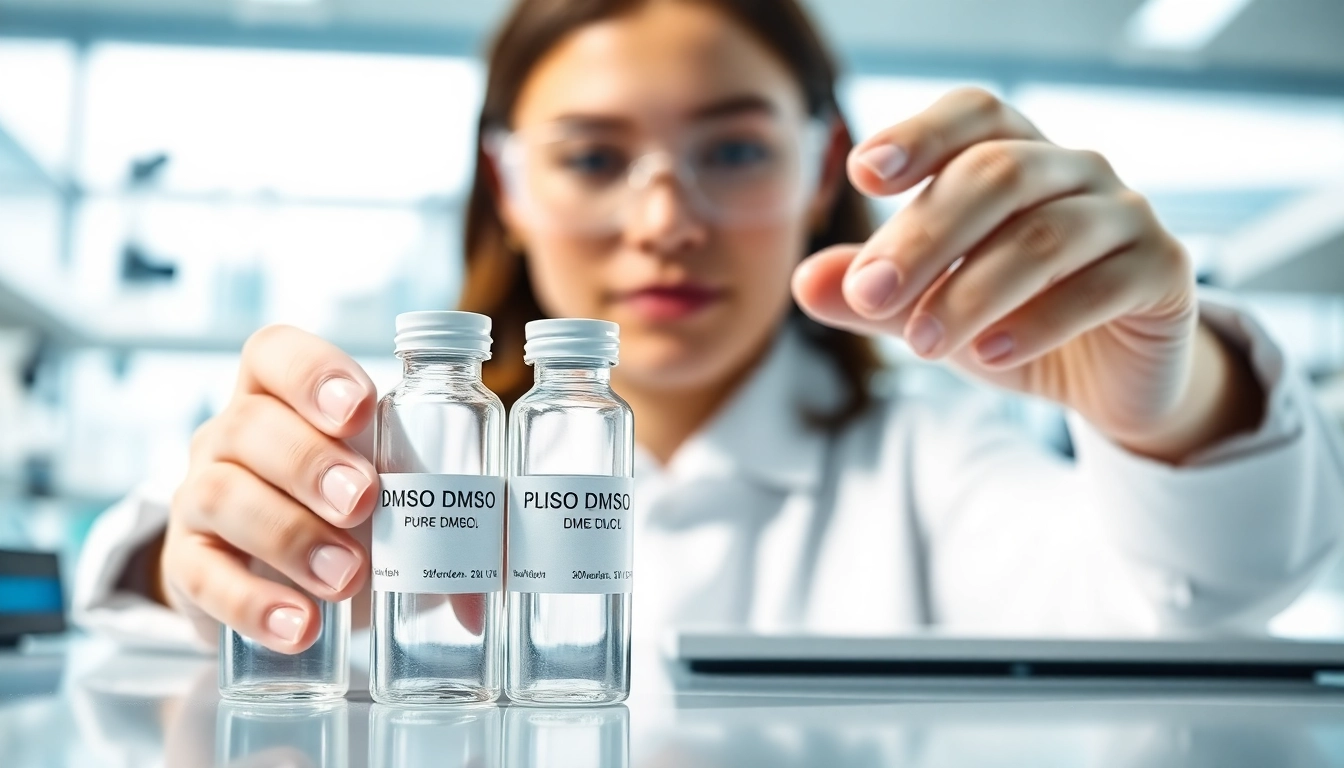
What is DMSO Organic?
Definition and Composition of DMSO
DMSO, or Dimethyl Sulfoxide, is a colorless liquid that is both odorless and highly versatile in its applications. As an organic compound, its chemical formula is CH3OS. Originally discovered in the mid-19th century, DMSO gained attention for its ability to penetrate biological membranes, making it an essential compound in both medical and industrial settings. It is produced through the methanol sulfoxidation of lignin, the natural polymer found in wood, making it a unique product derived from a renewable resource.
Sources and Production Methods
DMSO is primarily extracted from the lignin found in plant matter, particularly wood. The production involves a non-synthetic process where lignin is subjected to various chemical treatments, allowing for the safe extraction of DMSO. This natural origin is a fundamental aspect of its classification as dmso organic. The production process can include both chemical and biological methods; however, the focus on organic integrity has led to an increasing demand for consistently high-purity DMSO derived from environmentally friendly processes.
Properties of DMSO Organic
DMSO has numerous notable properties that enhance its application range. Among its key characteristics are:
- Polar Solvent: DMSO is highly polar, which facilitates the dissolution of both polar and non-polar substances, making it an excellent solvent in research and industrial applications.
- Low Toxicity: Compared to many other industrial solvents, DMSO exhibits low toxicity profiles for human usage, as long as it is handled under suitable guidelines.
- Ability to Transport Molecules: Its ability to easily permeate biological membranes allows DMSO to serve as a carrier for pharmaceuticals and other compounds, enhancing their absorption.
- High Boiling Point: DMSO has a high boiling point of 189 °C, making it stable under a wide range of temperatures.
Uses of DMSO Organic
Common Applications in Medicine
In the medical field, DMSO has garnered substantial attention for its therapeutic properties. It is often used as a vehicle for other drugs, aiding in their absorption through the skin. Some of the most prevalent uses include:
- Topical Pain Relief: DMSO is applied to alleviate conditions such as arthritis, muscle pain, and sports injuries.
- Anti-inflammatory Agent: It is well-documented for its anti-inflammatory effects, making it a potential treatment for various inflammatory disorders.
Industrial and Research Uses
DMSO serves multiple roles in the industrial sector, predominantly as a solvent in chemical reactions, particularly in organic synthesis. Its properties are highly valued in various sectors, including:
- Pharmaceutical Manufacturing: DMSO is involved in formulation processes for drugs to enhance solubility.
- Polymer Production: It is utilized as a solvent in creating polymers and other specialty chemicals.
- Biotechnology: In laboratories, DMSO is often used for cryopreservation of cells and as a reagent in assays.
DMSO in Agriculture and Veterinary Medicine
Outside human use, DMSO plays a critical role in agriculture and veterinary applications. Its penetration-enhancing properties make it beneficial for:
- Pesticide Delivery: DMSO helps improve the effectiveness of various pesticides by facilitating their absorption into plant tissues.
- Veterinary Treatments: Similar to its applications in human medicine, DMSO is utilized in veterinary care for treating inflammation and pain in animals.
Benefits of DMSO Organic
Therapeutic Benefits for Pain Relief
DMSO’s efficacy in pain management has been supported by both anecdotal evidence and scientific studies. It has shown promise in:
- Migraine Relief: Application of DMSO can reduce the intensity and duration of migraine headaches.
- Joint Pain Reduction: In conditions like osteoarthritis, DMSO may significantly alleviate pain and improve mobility.
Anti-inflammatory Properties Explained
One of the most remarkable aspects of DMSO is its strong anti-inflammatory properties. Research has illustrated its capability to:
- Inhibit Cytokines: DMSO can inhibit the release of various pro-inflammatory cytokines, aiding in systemic inflammation reduction.
- Enhance Healing Processes: By mitigating inflammation, DMSO promotes faster recovery from injuries and surgeries.
Benefits in Research and Development
For researchers, DMSO is more than just a solvent; its unique properties enable innovation across multiple scientific fields. Key benefits include:
- Facilitating Drug Discovery: DMSO assists in creating compounds that enhance drug solubility, thereby expediting research.
- Enabling Cryopreservation: Scientists utilize DMSO for preserving cells at ultra-low temperatures, maintaining cellular viability.
Safety and Precautions with DMSO Organic
Potential Risks and Side Effects
While DMSO is generally considered safe, some potential side effects must be noted. These can include:
- Skin Reactions: Irritation at the site of application can occur, particularly with undiluted DMSO.
- Allergic Reactions: Some individuals may experience reactions ranging from mild to severe upon exposure.
Guidelines for Safe Use
To minimize risks while utilizing DMSO, adherence to safety guidelines is paramount. Important recommendations include:
- Patch Testing: Perform a skin patch test before extensive application to check for allergic reactions.
- Proper Concentration: Use appropriate concentrations of DMSO for specific applications, reducing the risk of irritation.
Regulatory Status Around DMSO
The FDA has approved DMSO for specific medical uses, notably for interstitial cystitis and as a vehicle for other drugs. Its status, however, can vary globally, with some countries restricting its use strictly to research. Constantly monitor guidelines for updates regarding the compound’s regulatory status.
Frequently Asked Questions about DMSO Organic
Can DMSO Organic Be Used for Skin Conditions?
Yes, DMSO is often used to treat various skin conditions like psoriasis and eczema due to its anti-inflammatory properties and ability to enhance drug penetration.
Is DMSO Safe for Human Consumption?
DMSO is not approved for human consumption; it is primarily used topically and under medical supervision only.
How to Properly Store DMSO Organic?
DMSO should be stored in a cool, dark place, away from direct sunlight, and in tightly sealed containers to maintain its integrity.
Can DMSO Cause Allergic Reactions?
Yes, while generally safe, some individuals may develop allergic reactions, including skin irritations or hives, particularly with sensitive skin.
Where Can I Purchase Quality DMSO Organic?
Quality DMSO can be purchased from reputable health stores, pharmacies, or online sources specializing in pharmaceutical-grade products.