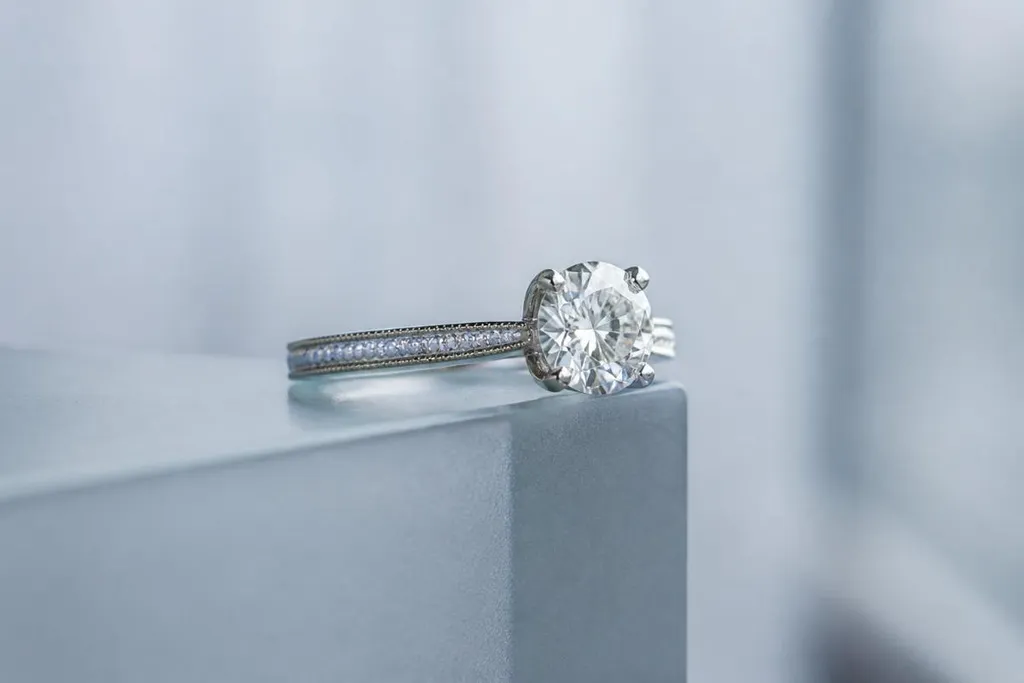
Prongs may occupy only a small area of an engagement ring, yet their shape and arrangement can noticeably influence the finished design. Double-claw prongs replace a single, broader securing point with two finer claws positioned closely together. The effect is detailed rather than dramatic, giving the centre setting a more intricate character while retaining an open view of the diamond or gemstone. It is a particularly effective choice for someone who appreciates vintage-inspired jewellery but wants the overall ring to remain elegant and wearable.
For a ring that already has the right centre stone, metal and setting style, this upgrade offers a way to refine the design at a smaller scale. Double claws can emphasise corners, introduce additional texture and make the setting feel more deliberately crafted without changing the fundamental silhouette of the ring.
Why Double Claws Create a Vintage-Inspired Look
Traditional fine jewellery often gains character from details that only become obvious on closer inspection. Double-claw settings follow this principle.
Instead of one prong holding a particular section of the stone, two slender claws sit alongside one another. From a distance, the difference can be subtle. Up close, the paired metalwork creates additional definition around the gemstone.
This level of detail works particularly well with engagement rings inspired by older jewellery styles. Vintage-influenced design is not necessarily about adding halos, engraving and decorative shoulders all at once. A carefully chosen prong treatment can introduce historical character while leaving the remainder of the setting comparatively restrained.
The proportions of the claws are crucial. If they are too heavy, the paired design can obscure more of the stone than intended. Finely executed double claws, by contrast, provide visible detail while allowing the centre gemstone to remain dominant.
Which Diamond Shapes Suit Double-Claw Prongs?
Double claws are especially effective on stones with clearly defined corners.
Emerald and radiant cuts are natural candidates because their clipped or angular corners provide logical positions for paired prongs. The double-claw arrangement can reinforce that geometry and give the stone a crisp, architectural frame.
Cushion cuts can take on a different character. Their softened corners contrast with the precision of paired claws, creating a combination that feels both romantic and structured.
Double claws may also be used thoughtfully with other shapes depending on the setting design. What matters is whether the prong placement complements the stone rather than making its outline appear unnecessarily complicated.
Stone size should be considered as part of this decision. A 2-carat centre, for instance, may provide enough visual scale for double claws to be appreciated without the metal becoming disproportionately prominent. Someone choosing a larger stone might therefore prefer paired prongs because the added setting detail feels balanced against its greater face-up presence.
With a more delicate centre stone, finer claws become particularly important.
How Metal Choice Changes the Appearance
The colour of the claws determines how visible the double-prong detail becomes.
Platinum or white gold can blend closely with a colourless diamond, particularly from normal viewing distance. This allows the paired structure to add refinement without strongly interrupting the outline of the stone.
Yellow or rose gold produces more contrast. Against a bright diamond, warm-toned double claws can become an intentional decorative element, making the craftsmanship of the setting easier to see.
A two-tone approach can provide another solution. A wearer might prefer a yellow gold band but choose a white-toned centre setting so that the double claws remain visually discreet around the diamond.
This is why prong selection should not be treated independently from metal choice. The same double-claw arrangement can look understated in one metal and considerably more decorative in another.
Security, Wear and Maintenance
Double claws are functional setting components, not purely ornamental details. Their precise construction and condition are therefore important.
Like any prong setting, they should be checked periodically for wear, movement or damage. Because the claws are fine, catching the ring repeatedly on clothing or exposing it to hard impacts is best avoided.
Regular cleaning also matters. Residue can accumulate around closely positioned claws, reducing the crisp definition that makes the design attractive. Gentle cleaning helps keep both the gemstone and surrounding metalwork clear.
If the ring receives a significant knock, professional inspection is sensible even when no damage is immediately visible. Everyday care is particularly worthwhile for an engagement ring expected to be worn for decades.
Final Thought
Double-claw prongs demonstrate how fine jewellery can gain personality through very small design decisions. Paired claws introduce precision, texture and a subtle vintage influence while still allowing the centre stone to command attention.
They are particularly effective with geometric or softly angular diamond shapes, where careful placement can reinforce the natural outline of the stone. For someone seeking a more considered finish without substantially changing their chosen ring design, double claws offer an understated but distinctive form of customisation.